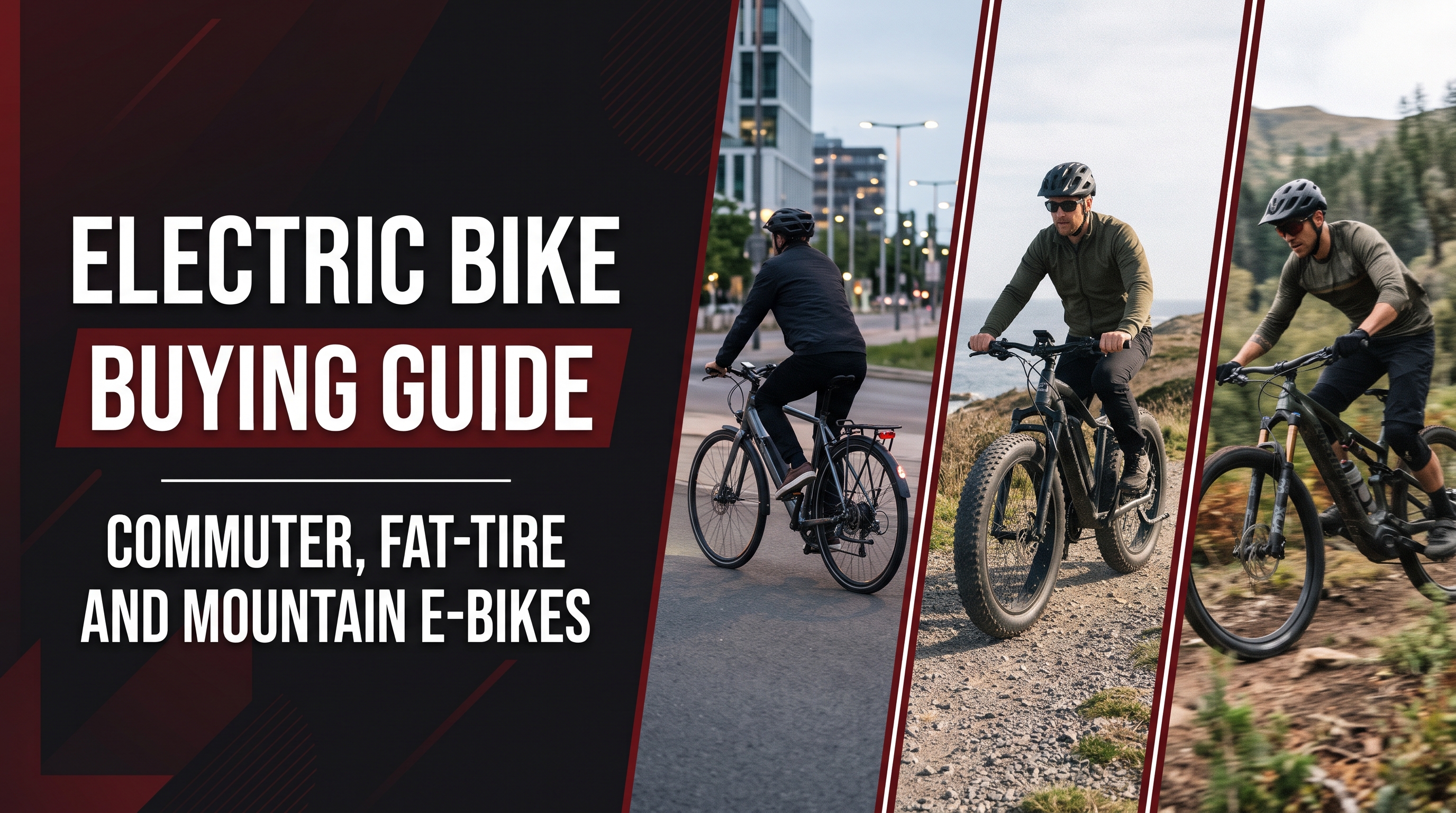
Choose an Electric Bike for the Riding You Actually Do
An electric bike should fit your everyday life: the trip to work, the grocery stop, the weekend ride and the place you will store it afterward. Start there rather than with the highest advertised speed or motor wattage.
This electric bike buying guide compares commuter, fat-tire, folding, utility and mountain-style options. It also highlights five models from LBRAWEE’s electric bicycles collection worth investigating for different needs.
The product details below come from the supplied catalog, not hands-on testing. Treat each model as a starting point for comparison, and resolve the marked specifications and compatibility questions before ordering.
Start With Your Route, Storage and Riding Rules
Write down your typical round-trip distance, the steepest section of your route and the surfaces you expect to ride. Then add practical constraints: stairs, narrow doorways, vehicle transport and access to an appropriate charging location.
Before comparing models, answer these questions:
- Will most trips involve pavement, gravel or designated trails?
- Will you carry groceries, work equipment or another load?
- Does the bike need to fit in an apartment, elevator or vehicle?
- Can you charge where you store it, or do you need a removable battery?
- What purchase and ongoing ownership budget feels comfortable?
Separately, check current state and local rules for the exact configuration you intend to use. Ask the relevant trail manager about access before planning off-pavement rides. Do not assume a product labeled “electric bicycle” is permitted on every road, bike path or trail.
For any candidate, request its documented assisted-speed limit, throttle behavior, motor rating and class designation, if applicable. Buyer tip: Manufacturer documentation must establish the model’s operating configuration; local authorities determine permitted use.
Match the Bike Category to Your Priorities
Commuter E-Bikes: Focus on the Complete Daily Trip
For a work or school commute, prioritize fit, manageable handling and practical equipment. Think through the entire journey, including parking, locking up and bringing your belongings inside.
Look for documented information about lights, fenders, rack compatibility and replacement parts rather than assuming those items are included. If you prefer a step-through layout, still check frame dimensions and rider-fit guidance; the frame label alone does not establish a comfortable fit.
Fat-Tire E-Bikes: Look Beyond Tire Width
Treat “fat tire” as one comparison point, not a complete description of ride quality. Ask about the exact tire dimensions, intended surfaces, recommended pressure and replacement-tire availability. Buyer tip: Tire specifications and operating guidance must match the exact model.
Also consider the practical footprint. Measure your storage space and check your transport equipment against the bike’s documented dimensions and weight. A tire style that appeals to you still needs to work with your daily routine.
Mountain-Style E-Bikes: Verify Intended Use
A mountain-bike name or aggressive appearance is not enough to establish suitability for technical trails. Before buying for rough terrain, request the manufacturer’s intended-use guidance, suspension details, braking specifications and applicable load limits. Buyer tip: Trail suitability and component capabilities require model-specific documentation.
If your actual riding is paved paths and occasional maintained gravel, describe that use clearly when seeking a recommendation. Avoid paying for a category label without understanding what it means for the particular bike.
Folding and Utility Bikes: Solve a Specific Practical Problem
For a folding bike, ask for folded dimensions, total weight and instructions for securing the folded frame. Buyer tip: Folded size, carrying weight and latch operation are model-specific. Folding is useful only if the resulting package works in your space and is manageable for you.
For a utility bike, begin with the load you want to carry. Confirm total payload, rack limits and approved accessories separately. Buyer tip: Payload and accessory compatibility require manufacturer confirmation. Do not assume a rack supports a passenger or child seat.
Five Electric Bikes to Compare
These options illustrate different shopping priorities. They are not a performance ranking, and missing catalog details should remain open questions—not inferred features.
Aventon Level.2 Commuter Step-Through: A Commuting Candidate
The Aventon Level.2 Commuter Step-Through is listed in a Medium/Large configuration, with up to 60 miles of maximum range and a maximum speed of 28 mph. Buyer tip: Confirm frame sizing, range-test conditions and the assistance mode associated with the listed speed.
Put it on your shortlist if you want to investigate a commuter-oriented, step-through option. Before choosing it, compare its sizing guidance with your measurements and ask which everyday accessories are included.
Treat the maximum range as a claim to investigate, not your guaranteed commuting distance. Request guidance for a route similar to yours and leave room in your planning for detours and charging limitations.
Aventon Aventure 2: A Fat-Tire Comparison Point
The Aventon Aventure 2 is identified in the catalog as a fat-tire electric bike. The supplied specification list does not establish battery capacity, motor output, suspension or range.
Consider it if fat tires are on your wish list, then build a complete comparison before deciding. Request exact tire dimensions, bike weight, rider sizing and intended-use guidance. Buyer tip: These details are not established by the supplied specifications.
The useful question is not whether the name promises adventure. It is whether the documented bike fits your surfaces, storage space and riding needs.
Ridstar Folding 750W: A Storage-Focused Candidate
The Ridstar Folding 750W Electric Bike lists a folding frame, 20-inch wheels, fat tires, a 750W motor and a 48V, 14Ah battery. Buyer tip: Confirm exact configuration and whether motor wattage is nominal or peak.
This is a candidate to investigate when storage or vehicle transport is central to your decision. Request folded dimensions and lifting weight before assuming it will fit a trunk or be easy to carry upstairs.
The catalog name also describes a removable battery. Buyer tip: Confirm battery removal procedure and approved charging arrangements. Ask how the folding mechanism is secured and what inspection routine the manufacturer requires.
LEONX Aipas M2: A Mountain-Labeled Option Requiring Careful Checks
The LEONX Aipas M2 Electric Mountain Bike lists a 1500W motor, a 30 mph top speed, 26-inch wheels and fat tires. Buyer tip: Confirm motor-rating basis, speed conditions and exact wheel and tire specifications.
Those headline figures should prompt questions about intended use and permitted riding locations—not serve as the sole reason to buy. Request braking details, fit guidance, suspension information and manufacturer-approved terrain limits. Buyer tip: The supplied catalog does not establish those capabilities.
Before considering it for a commute or trail ride, check whether its documented configuration is allowed where you plan to ride.
Rad Power RadRunner 2: A Utility-Oriented Candidate
The Rad Power RadRunner 2 Electric Utility Bike offers a utility-labeled option for your comparison. However, the supplied catalog has no detailed specifications for this model.
Investigate it if errands and carrying belongings are important to you. Ask for total payload, rack capacity, compatible cargo accessories, sizing and battery details. Buyer tip: Capacities, accessory approvals and technical specifications require manufacturer documentation.
Build your proposed setup on paper first, including the rider and everything you intend to carry. Then confirm that the complete setup—not just the bike alone—is approved.
Read Battery, Range and Motor Claims Carefully
Compare Battery Information Consistently
Ask for battery energy in watt-hours, along with the exact battery model and replacement options. Do not compare battery capacity using amp-hours alone when listed voltages differ.
Also request charging instructions, charger compatibility and documentation for any claimed electrical-system certification. Buyer tip: Charging requirements and certification status must be confirmed for the exact bike, battery and charger combination. Do not infer certification from a brand name or a generic safety statement.
Plan Around Your Route, Not a Maximum Range Claim
When a listing says “up to” a certain distance, ask how that figure was obtained. Useful questions cover rider and cargo weight, terrain, assistance setting, speed and test conditions. Buyer tip: Manufacturer range methodology and operating assumptions need confirmation.
For your own planning, leave a comfortable distance buffer rather than choosing a bike whose advertised maximum barely covers your trip. If charging away from home matters, verify that the location permits it and that you can follow the manufacturer’s instructions there.
Do Not Rank Bikes by Wattage Alone
Ask whether the listed motor output is nominal, peak or a combined figure. Buyer tip: Motor-rating definitions vary by listing and need manufacturer clarification. Then compare fit, controls, braking information, intended use and legal access alongside that number.
A larger advertised number does not answer whether you can comfortably handle, store or legally use the bike on your preferred route.
Check Fit, Ownership Costs and Support Before Ordering
Request rider-height guidance, frame measurements, total weight and adjustment limits for the exact size you are considering. Buyer tip: Fit dimensions and adjustment ranges require model-specific documentation. If possible, arrange a fitting or test ride rather than relying solely on photographs.
Budget beyond the bike itself. Include an appropriate helmet, lock, any approved carrying accessories, assembly and routine service. Ask who can perform maintenance locally and how replacement batteries, chargers, tires and other parts are obtained.
Finally, review the warranty, return conditions and assembly requirements in writing. Clarify who handles electrical troubleshooting and whether any setup steps require professional assistance. Buyer tip: Warranty coverage and assembly requirements must match the exact product.
Make a Shortlist Based on Everyday Use
Choose two or three candidates that match your route and storage constraints. Compare documented fit, operating configuration, battery information, carrying limits and ownership support side by side. Keep unanswered questions visible until they are resolved.
Browse LBRAWEE’s electric bicycles collection to start your shortlist. The goal is not the most impressive specification sheet—it is a bike whose verified capabilities match the riding you actually plan to do.